Cleaned Properly, Not Just Wiped Down
AC Cleaning & Duct Cleaning
A proper, professional clean — filter, coil, disinfection, and full duct cleaning for split, window, and central systems — the difference between an AC that just runs and one that actually cools efficiently.
What Level of Clean Do You Need?
Basic Clean
AED 120 – 250Filter and vent cleaning
Removes surface dust and debris from the filter and vent — the quickest way to restore airflow and cooling performance if it's dropped off recently.
What happens: The filter is removed, rinsed or replaced depending on type, and the visible vent and grille surfaces are wiped down. Takes under an hour per unit and needs no disassembly.
Deep Clean
AED 350 – 600Filter, coil, drain pan & sanitizing treatment
Addresses the mold and bacterial growth that causes musty smells — this is the tier that actually resolves an odor complaint, not just a dusty-filter complaint. Includes a disinfecting/sanitizing treatment on the coil, not just a rinse.
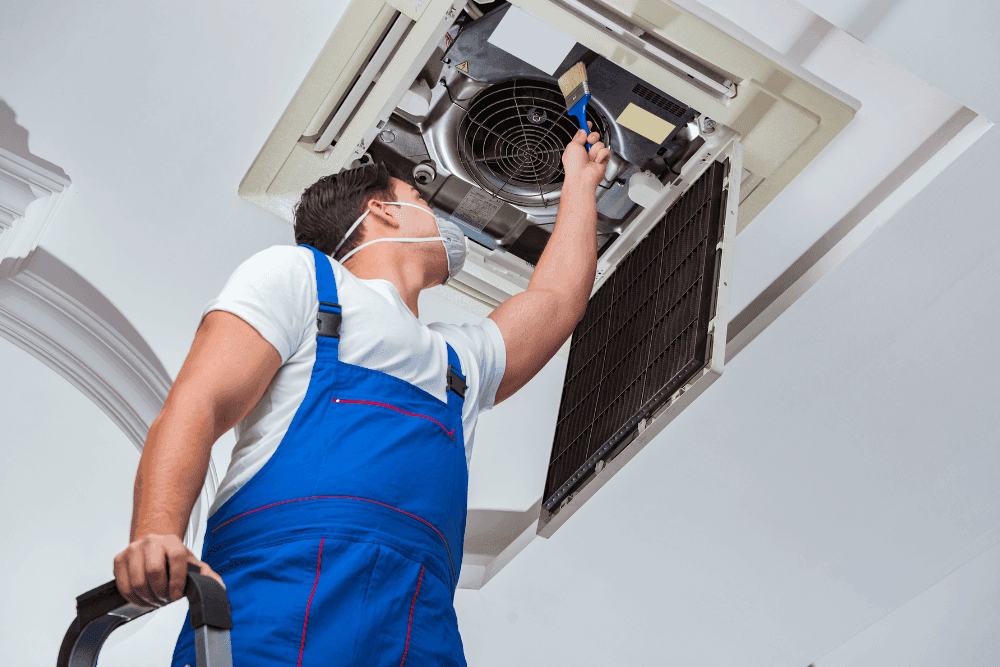
What happens: The indoor unit's front panel comes off to access the evaporator coil directly, which is jet-sprayed and treated with a coil-safe cleaning and disinfecting solution to break down mold, bacteria, and mineral buildup — a genuine sanitizing step, not just a wipe-down. The drain pan is cleared and checked for proper slope toward the drain line.
Full Duct Clean
AED 500 – 900Complete ductwork, filter, and coil
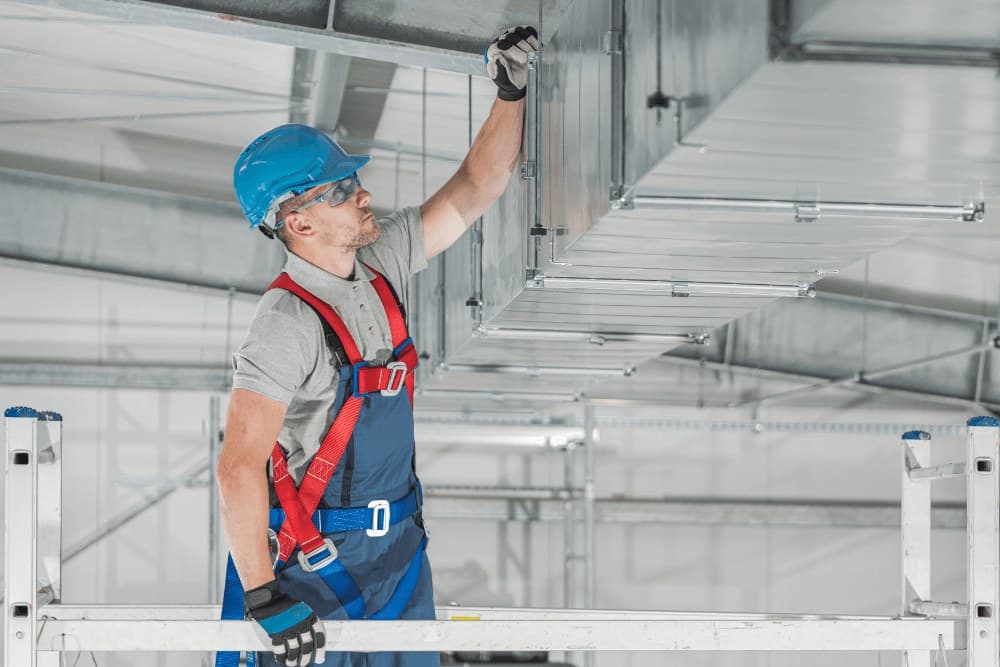
For central and ducted systems specifically — clears dust and debris built up throughout the ductwork itself, not just at the unit.
What happens: A rotary brush system works through accessible duct runs to dislodge built-up dust, followed by vacuum extraction. Register covers and any accessible duct sections are cleaned individually, not just at the air handler.
Not sure which tier fits your situation? Call and describe what you're noticing — smell, weak cooling, or just routine upkeep — and we'll recommend the right one before booking.
Why This Matters More in Abu Dhabi
Dust levels here are higher than most climates AC cleaning schedules are designed around, and units run near-constantly for months at a time during summer. That combination means filters and coils accumulate buildup faster, which shows up as reduced cooling, higher running costs, and — once mold and bacteria establish on a humid coil — a musty smell every time the unit starts.
None of this is a sign your unit is failing. It's a maintenance gap, and it's one of the more cost-effective things you can do for both air quality and your electricity bill.
Construction dust is a specific factor worth mentioning too — a property near ongoing construction, or one that's recently had renovation work done nearby, sees accelerated filter and coil fouling regardless of how well-maintained the unit otherwise is. If your cooling performance dropped noticeably around the same time as nearby construction started, that's worth mentioning when you book, since it changes how soon a follow-up clean makes sense.
Indoor Coil vs. Outdoor Coil — Both Need Cleaning, Differently
The evaporator coil inside your indoor unit is where mold and bacteria actually grow — it's cold, wet from condensation, and enclosed, which are exactly the conditions that support growth. This is the coil behind musty smells, and it's what the Deep Clean tier specifically targets with coil-safe solutions designed to break down biological buildup, not just rinse away dust.
The condenser coil in the outdoor unit faces a different problem entirely: it's exposed to open air, dust, sand, and in some installations, direct proximity to construction sites or roads. It doesn't grow mold the way the indoor coil does, but a caked condenser coil restricts the heat exchange the entire system depends on to actually reject heat outside — a factor we check as part of any cleaning visit, not just the indoor unit.
Because these two coils face genuinely different problems — biological growth indoors, dust and debris outdoors — a thorough clean addresses both, not just the one you can see from inside the room.
Why Ductwork Gets Dirty Faster Than You'd Expect
Every time a central or ducted system runs, air moves through metal or fiberglass-lined ducts that were never designed to be easy to clean — bends, joints, and register boxes all create spots where dust settles rather than continuing to flow through. Over months and years, that settled dust builds a layer thick enough to restrict airflow, harbor odors, and occasionally dislodge in visible puffs from a register when the system starts.
Unlike a filter, which is designed to be removed and cleaned, ductwork is sealed and largely inaccessible without specific tools — which is exactly why it gets neglected far longer than a filter would. A rotary brush system pushed through accessible runs, paired with vacuum extraction at the far end, is genuinely the only practical way to dislodge and remove buildup that's accumulated over years rather than weeks.
The result isn't just cleaner air — restricted ductwork makes the whole system work harder to move the same volume of air, which shows up as higher electricity bills and uneven cooling between rooms on the same system, not just as dust.
How Often, by System Type
Split units
Filter every 4-6 weeks in peak summer use, Deep Clean every 6-12 months. A unit running near-continuously through summer benefits from the shorter end of that range.
Window units
Similar filter schedule to split units, but coil access is more compact — cleaning takes a bit longer per unit despite the smaller size.
Central / ducted systems
Filter monthly during summer, Deep Clean annually, and a Full Duct Clean every 2-3 years — or sooner if the system has never had one and you're noticing reduced airflow at individual registers.
This Is About Air Quality, Not Just Dust
Dust and allergens
A dirty filter and coil don't just reduce airflow — they recirculate trapped dust and allergens through the room every time the unit runs, which matters more for households with allergy sufferers or young children. The same air passes through the same buildup dozens of times a day, so even a filter that looks only moderately dirty is doing this continuously, not as an occasional event.
Mold and bacterial growth
The evaporator coil is cold, wet, and dark by design — exactly the conditions mold and bacteria need. Regular deep cleaning is the direct fix, not air fresheners or masking the smell, which only cover the underlying growth rather than removing it.
Reduced efficiency, higher bills
A dust-caked coil restricts heat exchange, forcing the compressor to work harder and run longer to reach the same temperature — cleaning is a genuine cost-saving measure, not just a hygiene one. Over a full summer, the electricity cost difference between a clean and a neglected system is often more than the cost of the cleaning itself.
What You Can Do Yourself, and What Needs a Technician
| Task | Who does it | Why |
|---|---|---|
| Rinsing or replacing the filter | You, monthly | The single most valuable thing an owner can do between professional visits — a clean filter alone prevents a large share of the buildup that eventually needs a deep clean. |
| Wiping visible vent and grille dust | You, as needed | Quick and genuinely useful, though it doesn't reach the coil or drain pan behind it. |
| Coil cleaning | Technician | Requires removing the front panel and using coil-safe solutions correctly diluted — done wrong, cleaning chemicals can damage the coil's fins or corrode components over time. |
| Drain pan and line clearing | Technician | Accessing the drain pan safely and confirming proper drainage slope needs the unit opened up — not a task to attempt without the right access. |
| Duct cleaning | Technician | Requires specialized rotary brush and vacuum equipment to actually dislodge and extract debris from inside ductwork — nothing a household vacuum or brush reaches effectively. |
Rinsing or replacing the filter
You, monthly
The single most valuable thing an owner can do between professional visits — a clean filter alone prevents a large share of the buildup that eventually needs a deep clean.
Wiping visible vent and grille dust
You, as needed
Quick and genuinely useful, though it doesn't reach the coil or drain pan behind it.
Coil cleaning
Technician
Requires removing the front panel and using coil-safe solutions correctly diluted — done wrong, cleaning chemicals can damage the coil's fins or corrode components over time.
Drain pan and line clearing
Technician
Accessing the drain pan safely and confirming proper drainage slope needs the unit opened up — not a task to attempt without the right access.
Duct cleaning
Technician
Requires specialized rotary brush and vacuum equipment to actually dislodge and extract debris from inside ductwork — nothing a household vacuum or brush reaches effectively.
What a Cleaning Visit Actually Looks Like
Initial inspection
We check the filter, visible coil condition, and drain pan before recommending a tier — if a Basic Clean genuinely resolves what you're describing, we won't upsell you into a Deep Clean you don't need.
Filter and vent work
Removed, cleaned or replaced, and refitted — standard across every tier.
Coil and drain pan (Deep Clean and above)
Panel access, jet spray and coil-safe solution application, drain pan clearing and slope check.
Ductwork (Full Duct Clean only)
Rotary brush work through accessible runs, followed by vacuum extraction and register cleaning.
Test run and walkthrough
The unit runs a full cycle before we leave, and we'll point out anything else worth knowing — a developing fault unrelated to cleaning, for instance — rather than staying silent about it.
Signs You're Due for a Clean
- Musty or moldy smell when the AC starts up, even briefly
- Visible dust buildup on vents or grilles
- Cooling performance has dropped without any other obvious fault
- It's been over a year since the last professional clean
- Anyone in the household has developed new or worsening allergy symptoms
- The filter looks grey or clogged when you check it
What to Expect on the Day
A technician arrives in the booked window, confirms which tier fits what you're describing before starting, and works through the process with minimal disruption — a Basic Clean rarely requires you to leave the room, while a Deep Clean or Full Duct Clean may need brief access to move furniture away from vents or the indoor unit itself.
You'll get a fixed price confirmed before work starts, based on the tier and number of units — no surprise add-ons once the technician is already inside the unit.
Equipment That Actually Reaches the Problem
A household vacuum or a spray bottle of general cleaner doesn't reach an evaporator coil buried behind a front panel, and it certainly doesn't reach ductwork sealed behind walls and ceilings. Jet-spray equipment, coil-safe chemical treatments rated specifically for aluminum fins, and rotary brush systems sized for standard ductwork are what separate a genuine clean from a surface wipe-down.
This is also why DIY attempts at coil or duct cleaning sometimes make things worse rather than better — the wrong pressure or the wrong chemical can bend delicate coil fins or leave chemical residue that itself becomes a new source of odor. Getting it done properly the first time is usually cheaper than a DIY attempt followed by a professional visit to fix the DIY attempt.
Not Sure Which Tier You Need?
"Cooling feels weaker than usual, no smell" — start with Basic Clean; it resolves a meaningful share of these on its own.
"There's a musty smell when it starts up" — Deep Clean; a filter clean alone won't reach the mold causing the smell.
"Central system, uneven cooling between rooms, never had ductwork cleaned" — Full Duct Clean.
"Just routine upkeep, nothing wrong yet" — Basic Clean on a regular schedule is the most cost-effective way to avoid needing a Deep Clean later.
Still not sure? Call and describe what you're noticing — we'll recommend the right tier before booking, not the most expensive one.
What Actually Happens If You Skip It
Nothing dramatic happens overnight, which is exactly why cleaning gets deprioritized. What actually happens is gradual: cooling performance drops a little each season, electricity bills creep up as the compressor compensates for restricted airflow, and eventually either a musty smell becomes impossible to ignore or the system develops a fault that a proper repair diagnosis traces back to years of accumulated buildup rather than a single point of failure.
In the more serious cases, a severely blocked drain pan overflows and causes water damage to flooring or ceilings below — a cleaning-preventable problem that turns into a repair bill for something the AC itself didn't cause.
Commercial Properties
Restaurants, offices, and retail spaces typically need more frequent cleaning than residential properties given higher occupancy and, in kitchens specifically, grease particulate in the air that accelerates coil fouling well beyond normal dust.
See our Commercial AC & Chiller Repair page →Frequently Asked Questions
How often should I clean my AC in Abu Dhabi?
Why does my AC smell musty when it runs?
Does cleaning improve cooling performance, or is that just about smell?
Do you clean central AC ductwork, or just the unit?
Is duct cleaning worth it if I don't notice any smell or dust?
Can I clean the filter myself between professional visits?
What cleaning solutions do you use on the coil?
Do you offer AC sterilization or disinfection specifically, not just cleaning?
Does AC cleaning help with allergies?
How long does a Deep Clean take per unit?
Will cleaning fix reduced cooling performance, or do I need a repair?
Do you clean central AC systems the same way as split units?
Can a dirty AC cause a fault code or breakdown?
Is there a risk of damage from professional cleaning?
Do you offer cleaning as part of an AMC, or only as a standalone service?
What's the difference between AC cleaning and AC servicing?
How do I know if my AC needs a Basic or Deep Clean without booking a technician first?
Does cleaning void my AC's manufacturer warranty?
Can I schedule cleaning for multiple units in one visit?
Does the outdoor unit need cleaning too, or just the indoor one?
How soon can I book after noticing a problem?
Ready When You Are
Book an AC clean before the next heat wave.
Fixed price confirmed before any work starts. Licensed technicians, 90-day workmanship warranty.