Cooker Hoods · Extractor Fans · Range Hoods
Kitchen Exhaust Fan & Cooker Hood Repair in Abu Dhabi
A cooker hood that's stopped pulling smoke and steam out of the kitchen isn't just noisy or annoying — in an apartment with recirculating or shared-duct extraction, it's often the only thing standing between cooking smells and every other room. One Click Technicians repairs and cleans kitchen extraction of every type across Abu Dhabi, with a fixed price confirmed before any work starts.
What's Actually Included When You Book
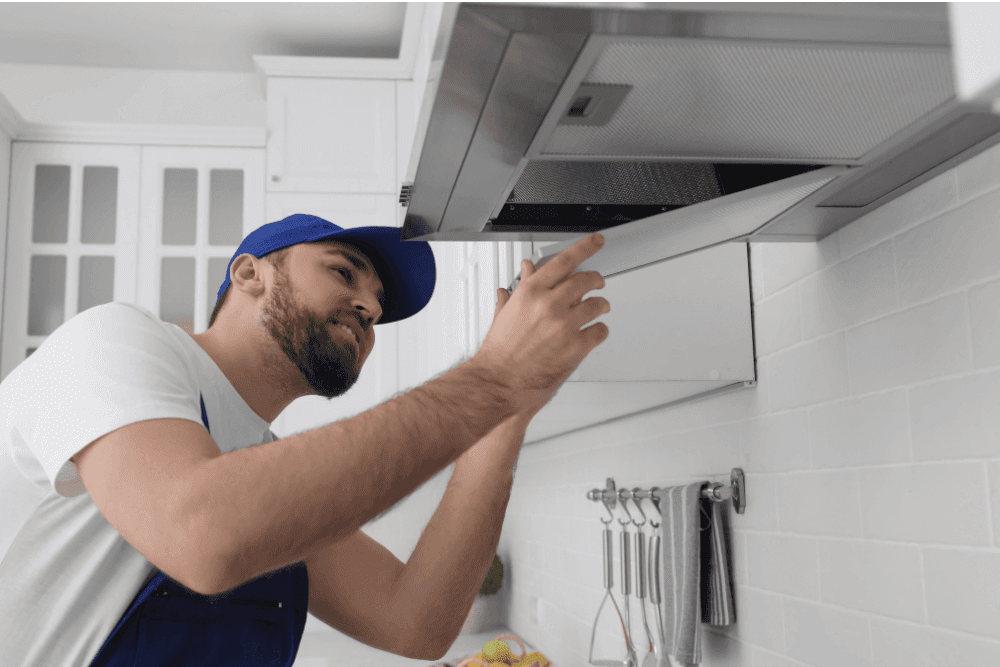
A technician checks both the mechanical and electrical side of your extraction system before quoting — motor, capacitor, switch, wiring, and how badly grease has built up in the ducting or filters, since a "weak suction" complaint is sometimes a fault and sometimes just an overdue clean. Common parts — motors, capacitors, switches — are carried for most hood and fan brands sold in the UAE. Every repair comes with a 90-day workmanship warranty.
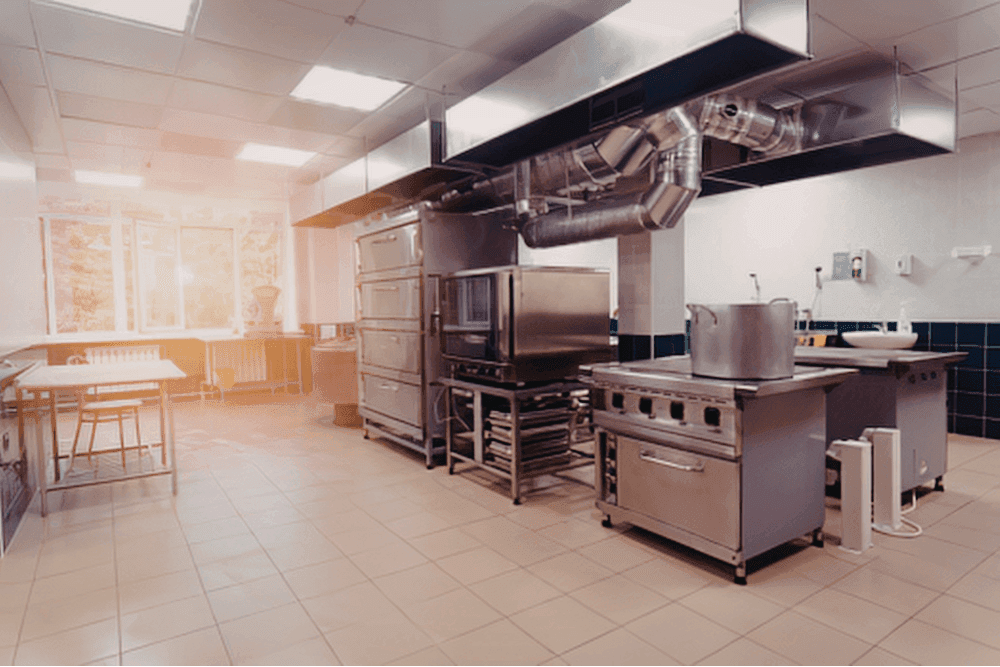
Running a restaurant, cafe, or commercial kitchen instead? Our commercial kitchen hood cleaning page covers fire-safety-compliant cleaning and repair for restaurants, hotels, and cafes — this page is for home kitchens.
Which Extraction System Do You Have?
The type of extraction genuinely changes what's likely wrong and how it's fixed — this is the detail most repair pages skip entirely, and it's often the difference between a quick filter fix and a real fault.
Ducted range hood (vented to outside)
The hood draws air through a filter and pushes it outside through ducting — most effective at actually removing smoke and odor rather than just filtering it. Common in villas and apartments with an exterior wall or riser connection nearby. When these stop working, the fault is almost always the motor, capacitor, or a duct that's become restricted with grease over time.
Recirculating / filter-only hood
No external ducting — the hood pulls air through a grease filter and, often, a charcoal filter, then releases it back into the kitchen. Common in apartments without easy access to an exterior wall for ducting. These rely entirely on filter condition to work well: a saturated charcoal filter (which isn't washable and needs periodic replacement, unlike the metal grease filter) is the single most common reason a recirculating hood "stopped working" when the fan itself is actually fine.
Shared building exhaust riser
Common in mid- and high-rise Abu Dhabi apartment towers: rather than each kitchen venting independently to the outside wall, units on the same vertical stack tie into one shared exhaust shaft running the height of the building, each with its own connection and backdraft damper. This changes how a "no suction" complaint gets diagnosed — the fault could be your unit's own fan or damper, or it could be a blockage or pressure issue further up the shared shaft, which is a building-wide maintenance matter rather than something fixable at your unit alone. Worth mentioning to the technician if you know or suspect your building uses this setup.
Standalone wall or ceiling extractor fan
A simple inline or wall-mounted fan without an integrated hood — common in older kitchens or as a secondary extraction point. Fewer components than a full hood assembly, which usually makes diagnosis faster: it's the motor, the switch, or the ducting, with far fewer variables than a hood's combined light/fan/filter assembly.
What's Actually Wrong With Your Extraction?
Kitchen extraction faults fall into a handful of patterns. Here's what we actually find, and roughly what each one costs.
| Symptom | Likely cause | Typical price |
|---|---|---|
| Fan runs but pulls little or no air | Usually a clogged grease filter or, on ducted systems, a duct restricted with built-up grease — not a motor fault. Worth checking and cleaning the filter first; if it's still weak after that, the motor's impeller or the ducting itself needs a look. | AED 100 – 300 |
| Won't turn on at all | A tripped breaker, a faulty switch, or a burnt-out capacitor — roughly in that order of likelihood. Motor failure is possible but less common as a first cause. | AED 150 – 400 |
| Loud humming, buzzing, or grinding noise | Worn motor bearings or an imbalanced fan blade — grease and dust buildup accelerates this wear pattern more than most people expect, which is part of why regular cleaning matters as much as repair. | AED 150 – 400 |
| Motor runs hot or smells like it's burning | A failing motor winding or a capacitor close to failure — treat this as worth addressing soon rather than waiting for it to stop entirely, since a failed motor mid-cook is worse timing than a scheduled repair. | AED 200 – 450 |
| Light works but fan doesn't (or vice versa) | The light and fan are usually on separate circuits within the same unit — a fault in one rarely means the other has failed too, which is a useful diagnostic clue on its own. | AED 100 – 300 |
| Switch or control panel unresponsive | A worn mechanical switch, a failed control board on touch-panel models, or a wiring connection that's come loose — touch-panel hoods cost more to fix here since the whole control board is usually one sealed part. | AED 150 – 400 |
| Persistent grease smell even after cleaning the filter | Grease has built up inside the ducting or fan housing beyond what the filter alone controls — this needs a proper internal clean, not just a filter swap. | AED 150 – 350 |
| Recirculating hood not reducing cooking odors | Almost always a saturated charcoal filter that's reached the end of its life — unlike the metal grease filter, this one isn't washable and needs replacing periodically, not cleaning. | AED 80 – 200 |
Fan runs but pulls little or no air
AED 100 – 300
Usually a clogged grease filter or, on ducted systems, a duct restricted with built-up grease — not a motor fault. Worth checking and cleaning the filter first; if it's still weak after that, the motor's impeller or the ducting itself needs a look.
Won't turn on at all
AED 150 – 400
A tripped breaker, a faulty switch, or a burnt-out capacitor — roughly in that order of likelihood. Motor failure is possible but less common as a first cause.
Loud humming, buzzing, or grinding noise
AED 150 – 400
Worn motor bearings or an imbalanced fan blade — grease and dust buildup accelerates this wear pattern more than most people expect, which is part of why regular cleaning matters as much as repair.
Motor runs hot or smells like it's burning
AED 200 – 450
A failing motor winding or a capacitor close to failure — treat this as worth addressing soon rather than waiting for it to stop entirely, since a failed motor mid-cook is worse timing than a scheduled repair.
Light works but fan doesn't (or vice versa)
AED 100 – 300
The light and fan are usually on separate circuits within the same unit — a fault in one rarely means the other has failed too, which is a useful diagnostic clue on its own.
Switch or control panel unresponsive
AED 150 – 400
A worn mechanical switch, a failed control board on touch-panel models, or a wiring connection that's come loose — touch-panel hoods cost more to fix here since the whole control board is usually one sealed part.
Persistent grease smell even after cleaning the filter
AED 150 – 350
Grease has built up inside the ducting or fan housing beyond what the filter alone controls — this needs a proper internal clean, not just a filter swap.
Recirculating hood not reducing cooking odors
AED 80 – 200
Almost always a saturated charcoal filter that's reached the end of its life — unlike the metal grease filter, this one isn't washable and needs replacing periodically, not cleaning.
What to Check Before You Call
A genuinely useful number of "broken hood" calls turn out to be a dirty filter, not a fault — worth two minutes checking first.
Clean the grease filter
A metal grease filter is washable — soak in hot water with degreasing dish soap. This alone fixes a surprising number of "weak suction" complaints.
Check the breaker
If the unit is completely dead, confirm the circuit breaker for that kitchen circuit hasn't tripped before assuming a fault.
Look for a visible obstruction
On ducted systems, check that nothing is blocking the external vent cap or grille outside — birds' nests and debris buildup are a genuine, if uncommon, cause.
Check if it's the charcoal filter, not the fan
On a recirculating hood, a lingering smell despite a running fan usually means the (non-washable) charcoal filter needs replacing, not a repair call.
Call a technician rather than continuing to investigate yourself if it's:
- •Motor replacement or rewiring
- •Persistent noise after cleaning and filter checks
- •Any work inside a shared building exhaust riser or duct
- •Burning smell or visibly damaged wiring
- •Control board or touch-panel faults
A Note on Safety
Most cooker hood and extractor fan faults are low-risk to live with briefly, but two situations are worth treating differently.
A burning smell or visible smoke from the unit itself
Switch it off at the wall or breaker immediately and don't use it again until it's been checked. This is different from cooking smoke — it points to a failing motor winding or an electrical fault, and continuing to run it risks turning a straightforward repair into a full motor or wiring replacement, or worse.
Water or grease near exposed wiring
A hood or fan mounted near a sink, hob steam, or a leaking ceiling above should never be handled with wet hands or opened up for a DIY look if you notice water intrusion near its wiring. This is exactly the kind of fault where a licensed technician's isolation-and-test process matters more than it might seem to for what looks like a simple appliance.
None of this is meant to make a routine filter clean or motor swap sound dramatic — the large majority of hood and fan faults are exactly that, routine. It's simply why these two specific situations are worth treating as "switch off and call" rather than "keep using and see."
Cleaning vs. Repair — and Why Cleaning Prevents Repairs
These are two different bookings, but they're closely connected: neglected cleaning is one of the most common causes of the mechanical faults on this page, not a separate issue.
Cleaning
Grease filter wash, internal fan housing and blade clean, and — on ducted systems — a check of visible duct sections for grease buildup. Recommended every 3-6 months for a kitchen used daily, more often for heavy frying or grilling. This is what restores suction on a hood that's "gotten weaker over time" rather than failed outright.
Repair
Motor, capacitor, switch, control board, or wiring faults — genuine component failures rather than reduced performance from grease buildup. A technician diagnoses which one you're dealing with on the same visit, since the symptoms often look similar from the user's side.
The connection between the two: a motor running constantly against a grease-clogged filter or duct works harder than it was designed to, which wears bearings and windings faster. Regular cleaning is genuinely the cheapest motor-life insurance available for this appliance.
How Often Should You Actually Clean It?
This depends far more on how you cook than on a fixed calendar interval — a household that fries daily needs a different schedule from one that mostly boils and steams.
Light cooking (occasional, mostly boiling/steaming)
Grease buildup is slow; the filter is the main thing to check.
Every 3-4 months
Daily cooking, moderate frying
The most common pattern for a family kitchen in Abu Dhabi.
Every 6-8 weeks
Heavy frying, grilling, or high-spice cooking
Grease and airborne oil particles accumulate faster with these cooking styles.
Every 3-4 weeks
A simple way to tell if you're overdue
Run the fan on high with nothing cooking and hold a piece of tissue near the grille — if it doesn't hold in place against the airflow, suction has already dropped meaningfully, and a clean is overdue regardless of how long it's been since the last one.
Bathroom Extractor Fans
A different appliance from a kitchen hood, but similar underlying faults and a service we handle on the same visit if you're booking a kitchen repair anyway.
Bathroom extractor fans run far more hours per week than a kitchen hood in most homes, and humidity — not grease — is the main wear factor: it corrodes motor bearings and control electronics faster than dust alone would. A bathroom fan that's gone quiet, started rattling, or stopped extracting steam is almost always a motor or capacitor issue rather than a blockage, since there's no grease filter to clog in the first place. Typical repair: AED 100 – 350.
Repair or Replace?
A well-maintained hood or extractor fan typically lasts 10-15 years, well beyond most other kitchen appliances — which is exactly why replacement rarely makes sense before a repair is at least tried.
Usually worth repairing
A motor, capacitor, switch, or wiring fault on a hood of any age. These parts are inexpensive relative to a full replacement, and a hood's basic mechanism changes very little between a 5-year-old unit and a 15-year-old one.
Worth considering replacement
A touch-panel control board failure on an older unit where the whole sealed board needs replacing, or a unit where the fan housing itself has corroded — both can approach or exceed the cost of a new mid-range hood.
Replacing or Newly Installing a Hood
If your existing hood is beyond repair, or you're fitting one for the first time, a few details matter more than they might seem to.
Mounting height
Too high above the cooktop and it loses much of its capture efficiency regardless of how powerful the motor is; too low and it becomes a daily head-height hazard. We confirm the manufacturer's recommended clearance for the specific model rather than a generic estimate.
Duct run length and bends
Every bend and extra metre of ducting reduces real-world airflow compared to the manufacturer's rated figure — a hood that's underpowered for a long or heavily bent duct run will underperform even brand new, which is a design problem, not a fault to keep troubleshooting later.
Matching to a shared riser, if applicable
If your building uses a shared exhaust riser, the new hood's connection and backdraft damper need to match what the existing shared duct expects — this is worth confirming before purchase, not after installation day.
Electrical connection
Most hoods run on a standard socket circuit, but a built-in unit wired directly rather than plugged in needs a proper isolator switch fitted — a detail some budget installs skip.
Installation labor for a new hood or extractor fan typically runs AED 150–400, excluding the unit itself — see the pricing table above for the full fault-and-service breakdown.
Kitchen Exhaust Fan & Hood Repair Cost in Abu Dhabi
A filter clean and a motor replacement are both "hood jobs" on paper, but very different in cost. The table below breaks pricing down by fault, so you know roughly where you stand before a technician arrives.
| Fault type | Typical price | Note |
|---|---|---|
| Diagnostic call-out | AED 80 – 150 | Waived if you go ahead with the repair |
| Filter clean (grease filter) | AED 80 – 150 | Standalone visit; often bundled into a repair |
| Charcoal filter replacement | AED 80 – 200 | Recirculating hoods |
| Motor replacement | AED 200 – 450 | Depends on hood type & motor size |
| Capacitor replacement | AED 100 – 250 | All types |
| Switch / control replacement (mechanical) | AED 100 – 300 | |
| Control board replacement (touch panel) | AED 250 – 550 | Sealed board, brand-dependent |
| Internal duct/housing grease clean | AED 150 – 350 | Beyond filter-only cleaning |
| Bathroom extractor fan repair | AED 100 – 350 | Motor or capacitor, most common |
| New hood/extractor installation | AED 150 – 400 | Labor only, excludes unit |
Diagnostic call-out
AED 80 – 150
Waived if you go ahead with the repair
Filter clean (grease filter)
AED 80 – 150
Standalone visit; often bundled into a repair
Charcoal filter replacement
AED 80 – 200
Recirculating hoods
Motor replacement
AED 200 – 450
Depends on hood type & motor size
Capacitor replacement
AED 100 – 250
All types
Switch / control replacement (mechanical)
AED 100 – 300
Control board replacement (touch panel)
AED 250 – 550
Sealed board, brand-dependent
Internal duct/housing grease clean
AED 150 – 350
Beyond filter-only cleaning
Bathroom extractor fan repair
AED 100 – 350
Motor or capacitor, most common
New hood/extractor installation
AED 150 – 400
Labor only, excludes unit
Fixed price confirmed before we start
We diagnose on-site — mechanical and electrical — and agree a price before any work begins.
* Prices are in AED and are typical ranges for Abu Dhabi, inclusive of VAT where applicable. Your exact price is confirmed on-site after diagnosis.
Brands We Repair
Elica, Teka, Faber & Bosch/Siemens
The most common range hood brands in Abu Dhabi kitchens, covering everything from basic mechanical-switch models to touch-panel and gesture-control units. Touch-panel models (common on newer Elica and Teka units) concentrate the control electronics into one sealed board, which is worth knowing before assuming a "control not responding" fault is a quick fix — it's usually the whole board, not a component within it.
Also repaired: standalone extractor fans and older or unbranded hoods common in villas and older apartment buildings — the underlying mechanism (motor, capacitor, switch) is similar across almost every hood and fan on the market, which is why diagnosis rarely depends on finding brand-specific parts.
Areas We Cover in Abu Dhabi
We repair and clean kitchen extraction across Abu Dhabi, for apartments and villas alike. Don't see your area listed? Call to confirm — we likely cover it.
How Booking Works
- 1
Call or book online
Tell us the hood or fan type if you know it, and what it's doing.
- 2
A technician arrives, usually same day
Fully equipped to check both mechanical and electrical faults on the spot.
- 3
You get a fixed price after diagnosis
Nothing further happens until you say yes.
Frequently Asked Questions
How much does kitchen exhaust fan repair cost in Abu Dhabi?
My cooker hood is on but barely pulling any air — is that a fault?
My hood is making a loud humming or grinding noise — what's wrong?
What's the difference between a grease filter and a charcoal filter?
My building uses a shared exhaust duct — can you still repair my hood?
Do you clean cooker hoods, or only repair them?
Do you repair bathroom extractor fans too?
Is it safe to keep using a hood that smells like it's burning?
How long does a cooker hood or extractor fan usually last?
Do you install new cooker hoods, or only repair existing ones?
Is there a warranty on the repair?
Do you offer same-day kitchen exhaust fan repair?
How do I know if I have a ducted or recirculating hood?
Why does my new hood seem weaker than the one it replaced?
Can grease buildup in a kitchen hood actually be a fire risk at home?
Ready When You Are
Cooker hood or extractor fan not working? Book a technician today.
Fixed price confirmed before any work starts. Licensed technicians, 90-day workmanship warranty.