Toshiba Specialist · Same-Day
Toshiba Appliance Repair in Abu Dhabi
Refrigerators, washing machines, and AC units — one Toshiba specialist team across every appliance the brand actually makes for the home, with a fixed price confirmed before any work starts.
One Toshiba, Several Very Different Products
Toshiba sells across several genuinely different categories in the UAE — home appliances (refrigerators, washing machines, and a smaller AC range), plus consumer electronics and laptops through a separate part of the business entirely. This page covers Toshiba home appliances specifically. If you're looking for TV, laptop, or computer repair, that's a different kind of service altogether and not something we handle — worth confirming which you actually need before calling, since "Toshiba service center" searches online return results for both categories mixed together without distinguishing them.
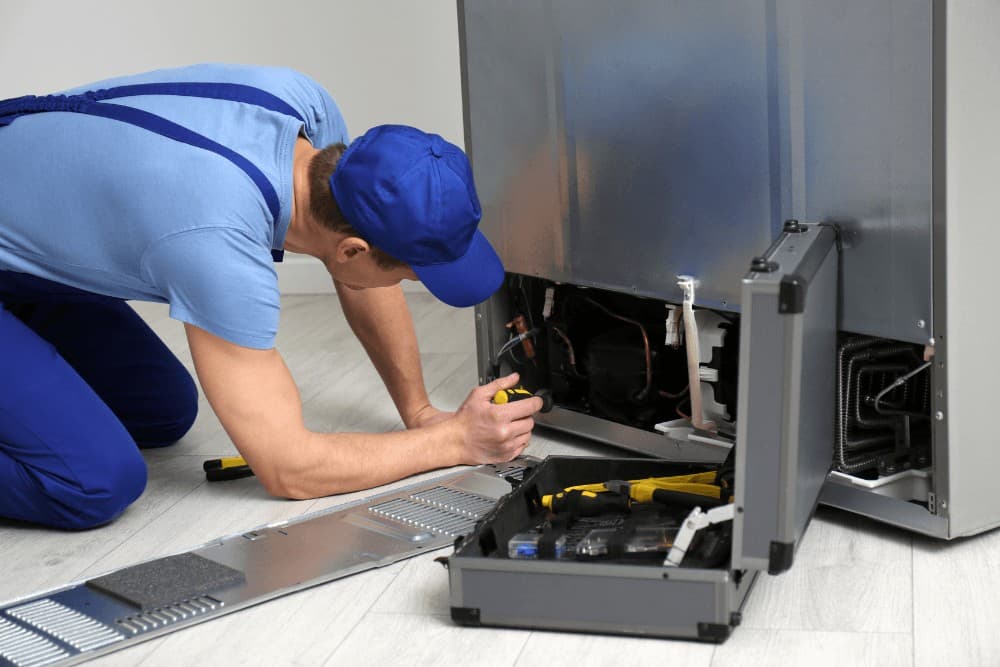
Toshiba Refrigerator Repair
Most current Toshiba refrigerators sold in the UAE run an inverter compressor — the compressor's speed is varied continuously by the control board to match cooling demand, rather than simply switching fully on and off. Toshiba backs many of these with a long compressor warranty, commonly cited at 10 years on current models, similar in spirit to the extended compressor coverage other major fridge brands offer. When a genuine compressor fault does happen within that window, it's worth confirming warranty status before paying for a repair that might be covered.
Toshiba's marketing highlights two features worth understanding because they affect how we diagnose a fault: DUO Hybrid Deodorizer, a combined odor-control system using both a catalyst and, on some models, UV light to break down odor-causing bacteria inside the fridge compartment, and Air Fall Cooling, an airflow design intended to distribute cold air more evenly from top to bottom of the compartment than a single vented duct would. Neither is a common source of failure on its own, but a fault reported as "uneven cooling — top shelf warm, bottom shelf fine" on a Toshiba fridge with Air Fall Cooling points toward the air distribution ducting specifically, rather than the compressor or evaporator being an automatic first suspect.
Toshiba's refrigerator range spans single-door, standard top-mount double-door, and larger multi-door and French-door models with ice and water dispensers — the dispenser-equipped models add a water inlet valve and, on ice-maker models, an ice maker module as additional points that can fail independently of the core cooling system, the same pattern seen across most brands offering this configuration.
A genuine share of Toshiba fridges we service in Abu Dhabi are landlord-supplied units in rented apartments, several years into service with no documented maintenance history — a first visit on these commonly includes a broader check of condenser dust, door seal condition, and drain pan cleanliness alongside the specific fault reported, since nobody has been tracking upkeep on the tenant's behalf. This is worth mentioning if you're renting and unsure how well-maintained the unit has been before you moved in.
Common Toshiba Fridge Problems, Diagnosed
| Symptom | Likely cause | What to do |
|---|---|---|
| Fridge not cooling, freezer working fine (or the reverse) | On single-evaporator designs, this usually points to restricted airflow between compartments — a blocked damper or duct — rather than the compressor, since one compressor and evaporator typically serve both compartments on Toshiba's standard range. | Check that nothing inside is blocking the internal air vent between compartments before assuming a bigger fault. |
| Top shelf noticeably warmer than the bottom of the fridge | On Air Fall Cooling models specifically, this points toward the air distribution ducting rather than the compressor or evaporator. | Mention this exact pattern when you call — it's a distinctive enough symptom on this feature to meaningfully narrow diagnosis. |
| Musty or odd smell despite the DUO Hybrid Deodorizer feature | The deodorizer system manages odor from normal food storage — it doesn't prevent odor from a genuine fault like a blocked condensate drain or spoiled food residue in hard-to-reach areas. | A drain pan and interior deep-clean resolves this in most cases; the deodorizer isn't malfunctioning just because a smell persists past normal food odor. |
| Compressor cycles on and off frequently, runs almost constantly | Dust-blocked condenser coils restricting heat exchange — very common in Abu Dhabi's dust conditions — or a door seal no longer sealing fully. | A coil clean and door-seal check resolves a genuine share of these calls without needing any parts replaced. |
| Water dispenser slow, dripping, or not dispensing | A frozen or kinked water line, or a failing inlet valve — the most common dispenser-specific faults on multi-door models. | Check the line isn't pinched behind the fridge before booking, especially after the unit has recently been moved. |
| Ice maker producing little or no ice | A frozen inlet line is the most common cause, followed by an overdue water filter restricting flow, ahead of the ice maker module itself failing. | If the filter hasn't been changed in 6+ months, that's worth checking before assuming a mechanical fault. |
| Loud buzzing or clicking from the back of the unit | A failing start relay or capacitor on the compressor's start circuit — not the inverter compressor's core electronics. | One of the more affordable Toshiba fridge repairs, despite sounding alarming. |
| Condensation forming on the outside cabinet | Usually a door seal issue letting warm, humid air contact the cold cabinet surface — more noticeable in Abu Dhabi's humidity than in drier climates. | Test the seal with a piece of paper before assuming an insulation fault, which is far less common than a simple seal issue. |
Fridge not cooling, freezer working fine (or the reverse)
- Likely cause
- On single-evaporator designs, this usually points to restricted airflow between compartments — a blocked damper or duct — rather than the compressor, since one compressor and evaporator typically serve both compartments on Toshiba's standard range.
- What to do
- Check that nothing inside is blocking the internal air vent between compartments before assuming a bigger fault.
Top shelf noticeably warmer than the bottom of the fridge
- Likely cause
- On Air Fall Cooling models specifically, this points toward the air distribution ducting rather than the compressor or evaporator.
- What to do
- Mention this exact pattern when you call — it's a distinctive enough symptom on this feature to meaningfully narrow diagnosis.
Musty or odd smell despite the DUO Hybrid Deodorizer feature
- Likely cause
- The deodorizer system manages odor from normal food storage — it doesn't prevent odor from a genuine fault like a blocked condensate drain or spoiled food residue in hard-to-reach areas.
- What to do
- A drain pan and interior deep-clean resolves this in most cases; the deodorizer isn't malfunctioning just because a smell persists past normal food odor.
Compressor cycles on and off frequently, runs almost constantly
- Likely cause
- Dust-blocked condenser coils restricting heat exchange — very common in Abu Dhabi's dust conditions — or a door seal no longer sealing fully.
- What to do
- A coil clean and door-seal check resolves a genuine share of these calls without needing any parts replaced.
Water dispenser slow, dripping, or not dispensing
- Likely cause
- A frozen or kinked water line, or a failing inlet valve — the most common dispenser-specific faults on multi-door models.
- What to do
- Check the line isn't pinched behind the fridge before booking, especially after the unit has recently been moved.
Ice maker producing little or no ice
- Likely cause
- A frozen inlet line is the most common cause, followed by an overdue water filter restricting flow, ahead of the ice maker module itself failing.
- What to do
- If the filter hasn't been changed in 6+ months, that's worth checking before assuming a mechanical fault.
Loud buzzing or clicking from the back of the unit
- Likely cause
- A failing start relay or capacitor on the compressor's start circuit — not the inverter compressor's core electronics.
- What to do
- One of the more affordable Toshiba fridge repairs, despite sounding alarming.
Condensation forming on the outside cabinet
- Likely cause
- Usually a door seal issue letting warm, humid air contact the cold cabinet surface — more noticeable in Abu Dhabi's humidity than in drier climates.
- What to do
- Test the seal with a piece of paper before assuming an insulation fault, which is far less common than a simple seal issue.
What Actually Breaks on a Toshiba Fridge, and Why
Dispenser and ice maker faults outnumber core cooling faults
On multi-door Toshiba models with water and ice dispensers, the water line, inlet valve, and ice maker module account for more of our call-outs than genuine cooling-system faults — worth mentioning dispenser symptoms specifically when you call.
Dust accelerates condenser-related faults here specifically
Abu Dhabi's ambient dust settles on condenser coils and internal fans faster than in cleaner-air climates — a coil clean resolves a genuine share of "runs constantly" complaints on its own.
Air Fall Cooling airflow faults get mistaken for compressor issues
An uneven-cooling complaint on a model with this feature is more often a ducting or damper fault than anything to do with the compressor or refrigerant charge — worth ruling out first given how much cheaper it is to fix.
Compressor warranty status changes the right first call
Because Toshiba commonly backs the compressor for 10 years on current fridge models, checking warranty status before paying for an independent repair on a suspected compressor fault can save the cost entirely.
Toshiba Refrigerator Repair Cost
Start relay / capacitor
The most common minor Toshiba fridge fault
AED 180 – 400
Door seal replacement
Fixes both cooling loss and condensation complaints
AED 200 – 450
Water inlet valve / dispenser fault
Multi-door models with dispensers only
AED 220 – 500
Ice maker module
Checked against a frozen line and filter first
AED 300 – 650
Evaporator fan or duct-airflow fault
Includes Air Fall Cooling duct-specific faults
AED 200 – 500
Inverter compressor replacement
Check compressor warranty status first — often still covered at 10 years
AED 900 – 1,800+
See our general Refrigerator Repair page for the full cross-brand breakdown.
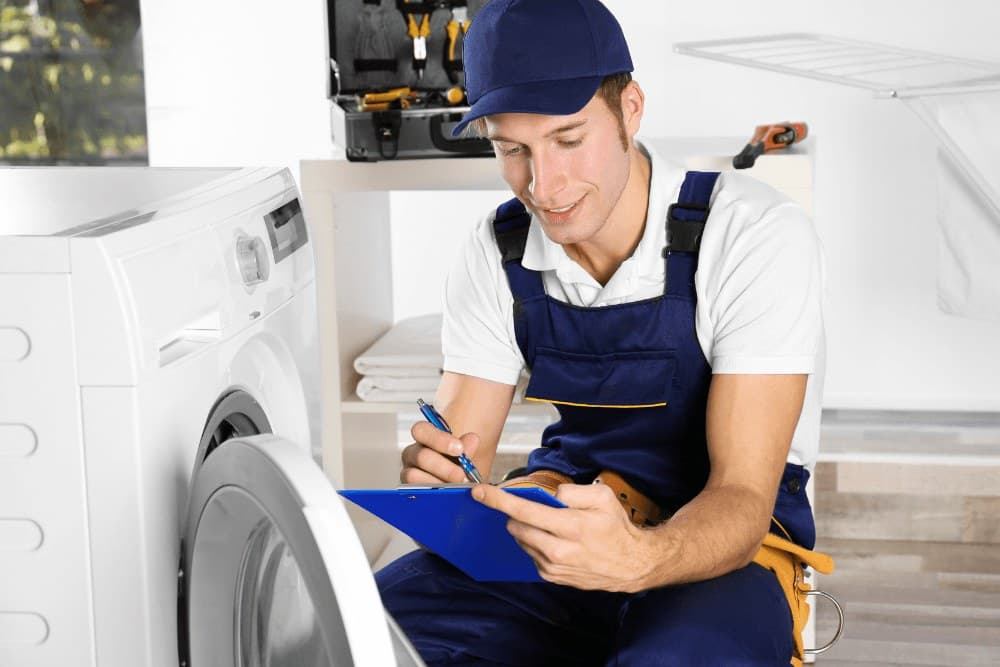
Toshiba Washing Machine Repair
Toshiba's washing machine range in the UAE covers both front-load and top-load configurations, most running an inverter motor — the drum motor's speed and torque are electronically controlled rather than fixed, which Toshiba markets on some top-load models as "Mega S DD Inverter" (direct-drive inverter). A direct-drive design connects the motor straight to the drum without a belt, removing belt wear as a failure point but making the motor and its control electronics a comparatively more expensive part when something does go wrong with them specifically.
Front-load models (Toshiba's TW-BJ and TW-BL series, among others sold regionally) behave similarly to most front-load machines from a fault-diagnosis perspective — door seal, drain pump, and heating element faults dominate the call-outs, with the inverter motor itself failing considerably less often than these more mechanical, wear-prone components. Top-load models (the AWDC and AWDUJ series) shift the fault profile slightly toward agitator and drive-coupling wear given the different mechanical layout, alongside the same drain and electrical fault categories.
As with any inverter-driven washing machine, a genuine motor or control-board fault is less common than symptoms suggest — a machine that won't spin, or spins erratically, is frequently a door lock, drive belt (on non-direct-drive models), or drain-related fault rather than the motor itself, and testing the cheaper, more common causes first before assuming the expensive one is standard practice on any brand, Toshiba included.
Abu Dhabi's water is harder than many washing machines are designed around by default, and Toshiba machines are no exception — mineral buildup inside the drum, detergent drawer, and heating element accelerates faster here than in softer-water markets, which is part of why a periodic maintenance clean (a hot empty-drum cycle with a dedicated washing machine cleaner) genuinely extends the interval between call-outs rather than being a cosmetic suggestion.
Common Toshiba Washing Machine Problems, Diagnosed
| Symptom | Likely cause | What to do |
|---|---|---|
| Machine won't start, door light blinking or unresponsive | A door lock fault — the machine won't run if it can't confirm the door is securely locked, for safety reasons built into every washing machine regardless of brand. | Check the door is fully closed and not obstructed by clothing caught in the seal before assuming an electrical fault. |
| Machine won't drain, water left in the drum at the end of a cycle | A blocked drain pump filter — by far the most common cause — or, less often, a kinked or blocked drain hose. | The drain pump filter, usually behind a small access panel at the front base of the machine, is worth checking first; a sock or coin lodged in it is a common, cheap-to-fix cause. |
| Loud banging or thumping during the spin cycle | An unbalanced load, worn drum bearings, or — on non-direct-drive models — a worn suspension component. | Try a smaller, more evenly distributed load first; a noise that persists regardless of load size points toward bearings or suspension. |
| Water leaking from the front of the machine | A worn door seal (front-load models) or a failing detergent drawer seal — both common, moderate-cost fixes. | Check for visible tearing or residue buildup on the door seal, which is often visible without any tools. |
| Machine trips the breaker when running | A failing heating element or a genuine electrical fault in the motor or wiring. | Don't keep resetting and running the machine — repeated trips indicate a real electrical fault, not a nuisance to reset past. |
| Clothes coming out still dirty or with detergent residue | A blocked detergent drawer or dispenser, or water pressure/inlet valve issues restricting proper rinsing. | Clean the detergent drawer thoroughly first — a build-up here is one of the most common, entirely DIY-fixable causes. |
| Machine on but drum not turning at all | On non-direct-drive models, a broken or slipped drive belt; on Mega S DD Inverter direct-drive models, a motor or control-board fault is more likely given there's no belt to fail. | Mention whether your model is direct-drive or belt-driven when you call — it meaningfully changes what we expect to find. |
| Musty smell from the drum between washes | Detergent and fabric softener residue buildup inside the drum and rubber door seal, more pronounced with frequent use of liquid detergent and Abu Dhabi's water hardness. | A hot empty-drum cycle with washing machine cleaner resolves this in most cases without needing a technician. |
Machine won't start, door light blinking or unresponsive
- Likely cause
- A door lock fault — the machine won't run if it can't confirm the door is securely locked, for safety reasons built into every washing machine regardless of brand.
- What to do
- Check the door is fully closed and not obstructed by clothing caught in the seal before assuming an electrical fault.
Machine won't drain, water left in the drum at the end of a cycle
- Likely cause
- A blocked drain pump filter — by far the most common cause — or, less often, a kinked or blocked drain hose.
- What to do
- The drain pump filter, usually behind a small access panel at the front base of the machine, is worth checking first; a sock or coin lodged in it is a common, cheap-to-fix cause.
Loud banging or thumping during the spin cycle
- Likely cause
- An unbalanced load, worn drum bearings, or — on non-direct-drive models — a worn suspension component.
- What to do
- Try a smaller, more evenly distributed load first; a noise that persists regardless of load size points toward bearings or suspension.
Water leaking from the front of the machine
- Likely cause
- A worn door seal (front-load models) or a failing detergent drawer seal — both common, moderate-cost fixes.
- What to do
- Check for visible tearing or residue buildup on the door seal, which is often visible without any tools.
Machine trips the breaker when running
- Likely cause
- A failing heating element or a genuine electrical fault in the motor or wiring.
- What to do
- Don't keep resetting and running the machine — repeated trips indicate a real electrical fault, not a nuisance to reset past.
Clothes coming out still dirty or with detergent residue
- Likely cause
- A blocked detergent drawer or dispenser, or water pressure/inlet valve issues restricting proper rinsing.
- What to do
- Clean the detergent drawer thoroughly first — a build-up here is one of the most common, entirely DIY-fixable causes.
Machine on but drum not turning at all
- Likely cause
- On non-direct-drive models, a broken or slipped drive belt; on Mega S DD Inverter direct-drive models, a motor or control-board fault is more likely given there's no belt to fail.
- What to do
- Mention whether your model is direct-drive or belt-driven when you call — it meaningfully changes what we expect to find.
Musty smell from the drum between washes
- Likely cause
- Detergent and fabric softener residue buildup inside the drum and rubber door seal, more pronounced with frequent use of liquid detergent and Abu Dhabi's water hardness.
- What to do
- A hot empty-drum cycle with washing machine cleaner resolves this in most cases without needing a technician.
What Actually Breaks on a Toshiba Washing Machine, and Why
Drain pump filter blockages are the single most common washing machine call-out
A sock, coin, or lint buildup lodged in the filter explains a genuine plurality of "won't drain" complaints across every brand, Toshiba included — worth checking before assuming a pump replacement is needed.
Direct-drive models remove belt faults but raise motor-fault cost
Mega S DD Inverter top-load models can't have a belt fault by design, but when the direct-drive motor or its control electronics do fail, it's a more expensive repair than a belt swap would have been on a comparable belt-driven model.
Abu Dhabi's water hardness accelerates detergent residue buildup
Musty drum smells and detergent-drawer blockages show up more often here than generic care guides account for — a periodic hot empty-drum cleaning cycle meaningfully reduces both.
Unbalanced loads mimic bearing faults convincingly
Loud banging during spin is worth testing with a smaller, evenly distributed load before assuming a bearing or suspension fault — a genuine share of "banging" complaints resolve with nothing more than a different load size.
Toshiba Washing Machine Repair Cost
Door lock / seal
One of the most common Toshiba washing machine faults
AED 180 – 350
Drain pump / filter service
Often resolved by clearing an obstruction, not a full pump replacement
AED 150 – 450
Heating element
Diagnosed against a tripped breaker or no-hot-wash complaint
AED 200 – 450
Drive belt (non-direct-drive models)
Not applicable to Mega S DD Inverter direct-drive models
AED 150 – 350
Drum bearing / suspension
Diagnosed against an unbalanced load first
AED 250 – 600
Inverter motor / control board
Less common than symptoms suggest — tested before replacement is quoted
AED 400 – 900
See our general Washing Machine Repair page for the full cross-brand breakdown.
Toshiba AC Repair
Toshiba's AC presence in the UAE is smaller than its fridge and washing machine range, but we service it under the same fixed-price, diagnose-first approach as every other brand. Most Toshiba split units run inverter compressors with a fault-code system broadly similar in structure to other major AC brands — sensor faults, communication faults between indoor and outdoor units, and pressure-protection codes are the categories we see most, with genuine compressor failure comparatively rare on units with reasonable upkeep. For the same depth of AC-specific fault-code coverage we give our higher-volume AC brands (Daikin, Mitsubishi Electric, Carrier, O General, and Gree each have their own dedicated page), see our general AC repair page, which covers cross-brand fault patterns, refrigerant types, and pricing that applies equally to Toshiba units.
See General AC Repair & PricingAre You an Authorized Toshiba Service Center?
No — and if your appliance is still within manufacturer warranty, including Toshiba's extended compressor warranty on many current fridge models, the authorized network is the right first call, since that coverage is free. Once you're past that warranty period, an independent technician using genuine-equivalent parts typically gets to you faster and charges less for the identical fault.
Frequently Asked Questions
Do you repair Toshiba TVs, laptops, or computers?
How much does Toshiba refrigerator repair cost in Abu Dhabi?
How much does Toshiba washing machine repair cost in Abu Dhabi?
What is Air Fall Cooling on a Toshiba fridge?
Is my Toshiba washing machine belt-driven or direct-drive?
Is it worth repairing an older Toshiba appliance, or should I replace it?
Are you an authorized Toshiba service center?
Do you service Toshiba AC units?
Why does my Toshiba fridge still smell despite the deodorizer feature?
My Toshiba washing machine trips the breaker — is that dangerous?
Do you carry Toshiba parts on the van, or do you need to order in?
Is same-day Toshiba appliance repair available in Abu Dhabi?
Why does my Toshiba washing machine bang loudly during the spin cycle?
Do you offer a single visit for both a Toshiba fridge and washing machine at the same address?
What's the difference between Toshiba's front-load and top-load washing machines for repair purposes?
Areas We Cover for Toshiba Appliance Repair
Ready When You Are
Book a Toshiba-experienced technician today.
Fixed price confirmed before any work starts. Licensed technicians, 90-day workmanship warranty.