Washing Machines · Dishwashers · Built-In & Freestanding
Washing Machine & Dishwasher Installation in Abu Dhabi
A new washing machine or dishwasher just delivered isn't ready to use until it's actually connected — and a handful of steps skipped at this stage (a transit bolt left in, a drain hose without a high loop) are exactly what causes a call-out a few months later for a "fault" that was really an installation shortcut. One Click Technicians installs both appliances properly the first time, with a fixed price agreed before we start.
What's Actually Included When You Book
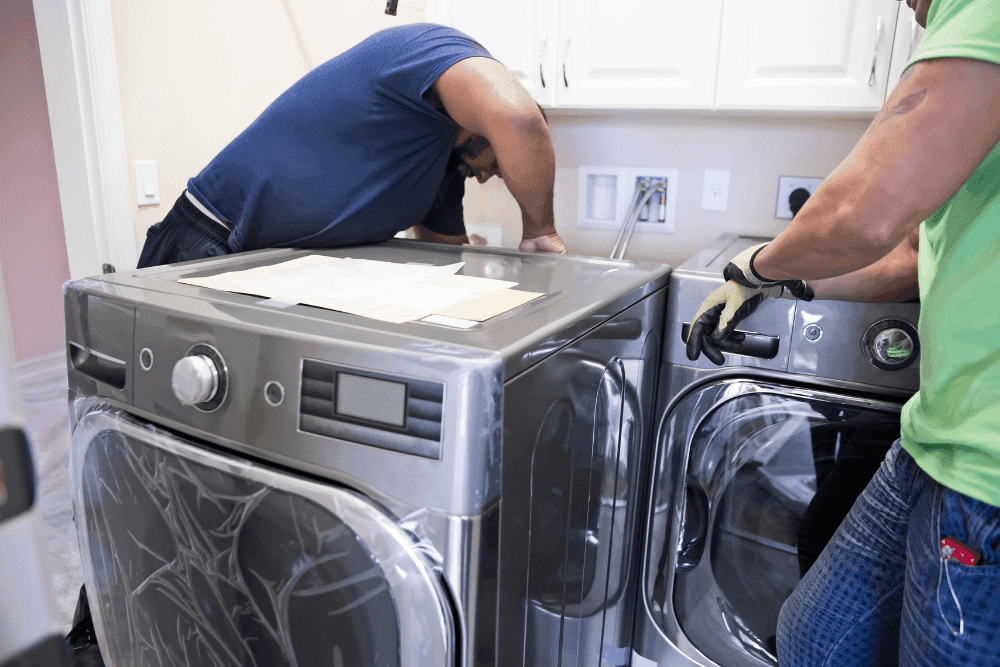
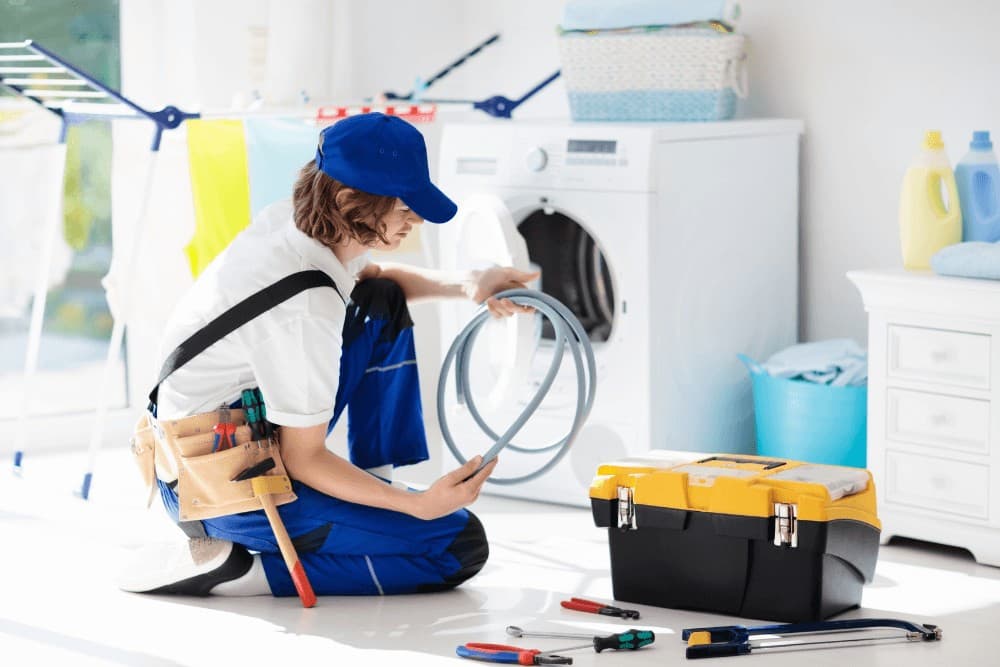
Water supply connection, drain hose routing, electrical connection, leveling, and a full test cycle — for both appliance types, every step below is part of the fixed price you're quoted, not billed separately once the technician is already on-site. Removal of an old unit is included when it's a replacement, not a separate call-out.
If your washing machine or dishwasher is already installed and something's actually wrong with it, our washing machine repair and dishwasher repair pages cover diagnosis and fault pricing — this page is specifically about connecting a new one.
Washing Machine Installation, Done Properly
Five steps, and skipping any one of them is exactly what turns into a repair call-out a few months down the line for a "fault" that traces back to installation day.
Remove the transit bolts first
Every new washing machine ships with 3-4 transit bolts locking the drum in place for shipping. Leaving even one in place is the single most common reason a "brand new machine" starts shaking violently or making a loud banging noise on its first spin cycle — it isn't a fault with the machine at all, it's a step someone skipped.
Connect the water supply correctly
Hot and cold hoses (where the model has both) need to go to the correct valve — reversed connections don't damage the machine but do cause cycle and temperature problems that look like a control fault. New washers ship with new hoses; reusing old, brittle hoses from a previous machine is a false economy given how little a new set costs against a burst-hose flood.
Route the drain hose with a proper loop
The drain hose needs a loop reaching a minimum height (typically around 60cm, higher for some models) before it goes down to the drain point. Skip this and you get slow drainage or siphoning — water draining out during the fill part of the cycle rather than staying in the drum, which looks exactly like a drain pump fault but isn't one.
Level the machine properly
All four feet need to sit flat and take even weight, checked with a spirit level side-to-side and front-to-back, not just "looks roughly even." An unlevel machine vibrates more than it should on every spin cycle, and that extra vibration accelerates bearing and suspension wear — this is a genuine long-term cause of the "drum bearing gone after 18 months" complaints, not just a noise annoyance.
Confirm the electrical circuit
A washing machine draws meaningful current during the heating part of a cycle, particularly on higher-temperature washes. A circuit already shared with other high-draw appliances is worth checking rather than assuming it's fine because the plug fits.
Dishwasher Installation, Done Properly
The dishwasher's biggest installation risk isn't the water supply — it's the drain. Get the high loop wrong and you'll see it within the first week.
Water inlet valve & shut-off
The dishwasher connects to a dedicated shut-off valve on the cold water line, usually tapped from under the sink, so it can be isolated independently without shutting off water to the whole kitchen. A shared valve with the sink tap works but makes future maintenance more inconvenient — worth the extra fitting if there's room.
Drain hose with a high loop, always
The drain hose has to run in a loop as high as possible under the counter before connecting to the sink's drain or a garbage disposal inlet. Without this loop, dirty water from the sink drain can siphon backward into the dishwasher — a genuinely common and entirely avoidable fault that shows up as "dishwasher smells bad" or "water in the tub before the cycle even starts."
Electrical connection
Most dishwashers are hardwired to a dedicated circuit behind the unit rather than plugged into a socket, particularly for built-in and integrated models — this needs a proper junction box and isolator, not a bare wire connection tucked behind the cabinet.
Leveling and cabinet fit
A dishwasher that isn't level doesn't drain fully at the end of a cycle, leaving standing water that looks like a drain pump fault. On integrated models, the cabinet door panel also needs correct alignment and spring tension on the hinge mechanism — get this wrong and the door either won't close flush or swings open under its own weight.
Full test cycle before we leave
A short test cycle checks for leaks at every connection, correct drainage, and that the door seal and latch are working — not just that the unit powers on. This is the step a rushed installation skips, and it's exactly the leak-under-the-sink call that follows a few days later.
Abu Dhabi's Water Supply and Your New Appliance
A couple of local water-supply details are worth knowing before installation, since they change what "normal operation" looks like for your new machine.
Desalinated supply is generally soft
Most of Abu Dhabi's piped water comes from desalination, which is naturally low in the dissolved minerals that cause hard-water scale. Some dishwashers still ship with a built-in water softener and salt reservoir designed for harder European supplies — on desalinated water this reservoir can usually be left empty or topped up far less often than the manual suggests, and we'll flag this on installation rather than leave you guessing.
Tank-fed vs. direct mains pressure
Many apartment towers feed units from a rooftop storage tank via a pressure pump rather than direct mains, and pressure can vary by floor or by time of day when demand across the building is high. A dishwasher or washing machine that fills slowly isn't necessarily faulty — checking the building's typical supply pressure is one of the first things worth ruling out before assuming an inlet valve problem.
Older buildings and supply-line sediment
In older buildings, galvanized or aging supply pipework can shed small amounts of sediment into the line, which is exactly what the mesh filter screens inside a washing machine or dishwasher's inlet hose are there to catch. On an installation in an older property, we check these filters are seated correctly and show you where they are, since a clogged inlet filter is one of the most common (and easiest to fix) causes of a slow-filling machine down the line.
Built-In / Integrated vs. Freestanding
This is the single biggest driver of installation cost and time for both appliances, and it's worth knowing which one you have before you book.
Freestanding
Stands on its own, finished on all visible sides, connects and slots into place. The faster, simpler installation of the two — usually the full job in under an hour for a washing machine, slightly more for a dishwasher's drain and electrical work.
Built-in / integrated
Sits inside a fitted cabinet housing, often with a matching cabinet door panel attached to the appliance's own front (fully integrated) or a control panel visible above a cabinet door (semi-integrated). This adds door panel fitting, hinge spring tension adjustment, and precise height/depth alignment to the job — genuinely more involved, and priced accordingly.
Replacing a built-in unit with a different brand
Cabinet cutouts and door panel mounting brackets aren't perfectly standardized across brands. Replacing a built-in dishwasher or washing machine with a different make sometimes needs bracket adjustment or, occasionally, minor cabinet modification — this is checked and quoted before we commit to a price, not discovered mid-installation.
Villa vs. Apartment Installations in Abu Dhabi
The appliance is the same, but where it's going in changes a few practical details worth knowing before we arrive.
Villas
Usually have a dedicated laundry room with its own floor drain, which makes a washing machine installation straightforward and adds a safety margin if a hose ever fails. Water pressure at the far end of a large villa can occasionally run lower than at the main supply point, worth flagging if your machine's cycles are running slower than expected.
Apartments
More often have the washing machine in a kitchen utility cupboard or an enclosed balcony rather than a separate room, usually with no floor drain — a drip tray under the machine is a sensible extra precaution here, not a formality. Dishwasher installs in apartment kitchens usually reuse the sink's existing hot/cold supply, which needs a compatible T-valve rather than a completely separate line.
Neither setup is harder to work with — we bring fittings for both — but knowing which applies to you means the quote you get over the phone is closer to the final price.
Replacement vs. First-Time Install
Same as with any appliance installation, the real cost driver is whether the connections already exist.
Replacement
Water, drain, and electrical connections are already in place from the old unit. The old appliance is disconnected and removed, the new one connected to the existing points, and tested — usually the fastest and most predictable version of this job.
First-time install
No existing water tap-off, drain point, or electrical circuit at the location — common in a newly handed-over apartment's laundry area, or fitting a dishwasher into a kitchen that was never plumbed for one. This needs new plumbing and possibly a new electrical run, priced after we've seen the space.
Many new-build apartments in Abu Dhabi come with a washing machine tap-off and drain point already roughed in, even if no machine has ever been connected — worth checking your utility area for these before assuming it's a first-time install job.
Installation Mistakes We Get Called Out to Fix
Every one of these comes from a rushed or DIY installation, not a manufacturing defect — and every one shows up as a "the machine is broken" call weeks or months later.
Transit bolts left in a washing machine
The most common installation mistake by far — the machine shakes violently and bangs on its first spin, and gets misdiagnosed as a factory fault when it's actually a two-minute fix left undone.
No high loop on a dishwasher drain hose
Leads to dirty sink water siphoning back into the dishwasher — a smell and hygiene issue that looks like a drain pump fault but is purely an installation shortcut.
Machine not properly leveled
Extra vibration on every cycle accelerates bearing and suspension wear on a washing machine, and causes incomplete draining on a dishwasher. Both eventually get billed as a "repair" for a problem installation created.
Reused old hoses on a new washing machine
A new machine ships with new hoses for a reason — older rubber hoses lose flexibility and are far more likely to crack or burst. New hoses cost very little against the cost of a flood.
Dishwasher hardwired without a proper isolator
A bare wire connection tucked behind the cabinet instead of a proper junction box and isolator switch — this is a genuine safety issue that isn't visible until the unit needs future servicing.
Shared electrical circuit overloaded
A washing machine's heating element draws real current — sharing a circuit with other high-draw appliances without checking capacity first is how you end up with a tripping breaker mid-cycle.
How Installation Affects Your Manufacturer Warranty
This is worth knowing before you decide to connect a new appliance yourself, not after a claim gets refused.
Water damage claims often ask how the appliance was connected
If a hose connection fails and causes water damage, both the appliance manufacturer's warranty process and a home insurance claim can ask whether the appliance was installed according to the manufacturer's instructions. A documented professional installation is straightforward evidence of that; a DIY connection with no record of it is a harder conversation to have after the fact.
Electrical faults tied to a bad connection aren't always covered
A control board or heating element fault caused by incorrect wiring, a loose connection, or an undersized circuit is typically treated as an installation problem rather than a manufacturing defect, which most appliance warranties exclude. Getting the electrical connection right the first time protects the part of the warranty that actually matters — the appliance itself.
Our installation warranty is separate, and covers our work specifically
The manufacturer's warranty covers the appliance; our workmanship warranty covers the connections, fittings, and installation work itself. Keeping both sets of paperwork together means whichever issue comes up later, you know exactly who to call rather than being passed between the retailer and the manufacturer.
Getting Ready Before We Arrive
None of this is mandatory, but a few minutes of prep makes the visit faster and avoids a return trip for something that could have been sorted in advance.
Clear a path to the installation spot
Washing machines and dishwashers are heavy and awkward through tight doorways — clearing furniture or boxes out of the route beforehand saves time on the visit.
Know where your main water shut-off is
Not essential, but it speeds things up if the isolation valve at the appliance itself turns out to be seized or missing and we need to shut off further upstream.
Check the socket near the appliance is a standard grounded outlet
A washing machine or freestanding dishwasher needs its own grounded socket, not a shared extension lead or a multi-socket adapter carrying other appliances.
Have the appliance's manual or model number handy
Some machines have brand-specific quirks — transit bolt positions, filter access panels — and having the manual on hand avoids guesswork on unusual models.
Confirm someone will be home for the full visit
A first-time install with new plumbing needs someone present throughout in case the water needs to be shut off mid-job for adjustments.
Caring for a Newly Installed Appliance in the First Month
A correct installation does most of the work, but a few simple habits in the first few weeks catch small issues before they become service calls.
Run one empty cycle before the first real load
Clears any manufacturing residue or leftover packaging dust from the drum or wash chamber, and gives you a chance to confirm the fill, drain, and spin all work correctly before you trust it with a full load of clothes or dishes.
Check underneath after the first two or three cycles
A hose connection that was tightened correctly can still weep slightly once it's been through a few full fill-and-drain cycles under real pressure. A quick look under the machine after the first few uses catches this early, before it becomes a bigger leak.
Recheck the level after the first week
Flooring can settle very slightly under a new appliance's weight, particularly on raised or tiled sub-floors. If you start noticing more vibration or noise than the first day, a quick releveling usually resolves it.
Don't overload the first few washes
Bearings and suspension components on a washing machine, and the spray arms on a dishwasher, perform best when they're not immediately pushed to full rated capacity. Easing in for the first week is a small habit that extends the appliance's working life.
Keep the installation receipt and warranty details together
Both the manufacturer's appliance warranty and our installation workmanship warranty are separate documents covering different things — keeping both means you know exactly who to call if something comes up later.
Installation Cost in Abu Dhabi
The gap between a freestanding replacement and a first-time built-in install is real — here's both ends broken out so there's no guessing which one applies to you.
| Job | Price | Note |
|---|---|---|
| Diagnostic / site visit | AED 80 – 120 | Waived if you go ahead with the installation |
| Freestanding washing machine installation | AED 120 – 250 | Replacement, existing connections |
| Built-in / integrated washing machine installation | AED 200 – 400 | Includes cabinet panel fitting |
| Freestanding dishwasher installation | AED 150 – 300 | Replacement, existing connections |
| Built-in / integrated dishwasher installation | AED 250 – 450 | Includes cabinet door panel & hinge tension |
| First-time install (either appliance, new plumbing point) | AED 350 – 900+ | Depends on new pipe/electrical run length |
| Old unit removal & disposal | Included | When installing a replacement |
| New dedicated electrical circuit, if needed | AED 200 – 500 | Priced separately once assessed |
Diagnostic / site visit
AED 80 – 120
Waived if you go ahead with the installation
Freestanding washing machine installation
AED 120 – 250
Replacement, existing connections
Built-in / integrated washing machine installation
AED 200 – 400
Includes cabinet panel fitting
Freestanding dishwasher installation
AED 150 – 300
Replacement, existing connections
Built-in / integrated dishwasher installation
AED 250 – 450
Includes cabinet door panel & hinge tension
First-time install (either appliance, new plumbing point)
AED 350 – 900+
Depends on new pipe/electrical run length
Old unit removal & disposal
Included
When installing a replacement
New dedicated electrical circuit, if needed
AED 200 – 500
Priced separately once assessed
Fixed price confirmed before we start
A standard installation is usually done in 1-2 hours. Total price is agreed after we've confirmed the appliance type and connection type — nothing changes once we start.
* Prices are in AED and are typical ranges for Abu Dhabi, inclusive of VAT where applicable. Your exact price is confirmed after we've seen the installation location.
Brands We Install
We install washing machines and dishwashers from every major brand sold in the UAE, and we're happy to fit a unit you've already bought.
Samsung, LG, Bosch, Siemens, Whirlpool & Midea
The most commonly installed brands in Abu Dhabi homes. Bosch and Siemens built-in dishwashers use a similar cabinet mounting system across most of their range, which usually means a fast, first-visit fit; Samsung and LG's built-in washing machine lines have slightly different footprint and hose-routing conventions worth confirming against your cabinet cutout if you're replacing an older, different-brand unit.
Areas We Cover in Abu Dhabi
We install washing machines and dishwashers across Abu Dhabi, for apartments and villas alike. Don't see your area listed? Call to confirm — we likely cover it.
How Booking Works
- 1
Call or book online
Tell us the appliance, brand, and whether it's a replacement or a first-time install.
- 2
A technician arrives, usually same day
Fully equipped for freestanding and built-in installs, plumbing and electrical connections.
- 3
You get a fixed price before we start
Confirmed once we've seen the appliance and connection point — nothing changes after.
Frequently Asked Questions
How much does washing machine installation cost in Abu Dhabi?
How much does dishwasher installation cost in Abu Dhabi?
Do you remove the transit bolts on a new washing machine?
Why does my new dishwasher smell bad or have water in it before running?
Can you install a dishwasher where there wasn't one before?
Do you install built-in and integrated appliances, or only freestanding?
Can you fit a different brand into an existing built-in cabinet cutout?
Do you remove my old washing machine or dishwasher?
Is there a warranty on the installation?
Do you offer same-day installation?
My washing machine or dishwasher is installed but not working properly — is that covered here?
How long does installation take?
Can you install a garbage disposal unit under my kitchen sink?
Ready When You Are
New washing machine or dishwasher waiting to be connected? Book a technician today.
Fixed price confirmed before any work starts. Licensed technicians, 90-day workmanship warranty.