Hitachi Specialist · Same-Day
Hitachi Refrigerator Repair in Abu Dhabi
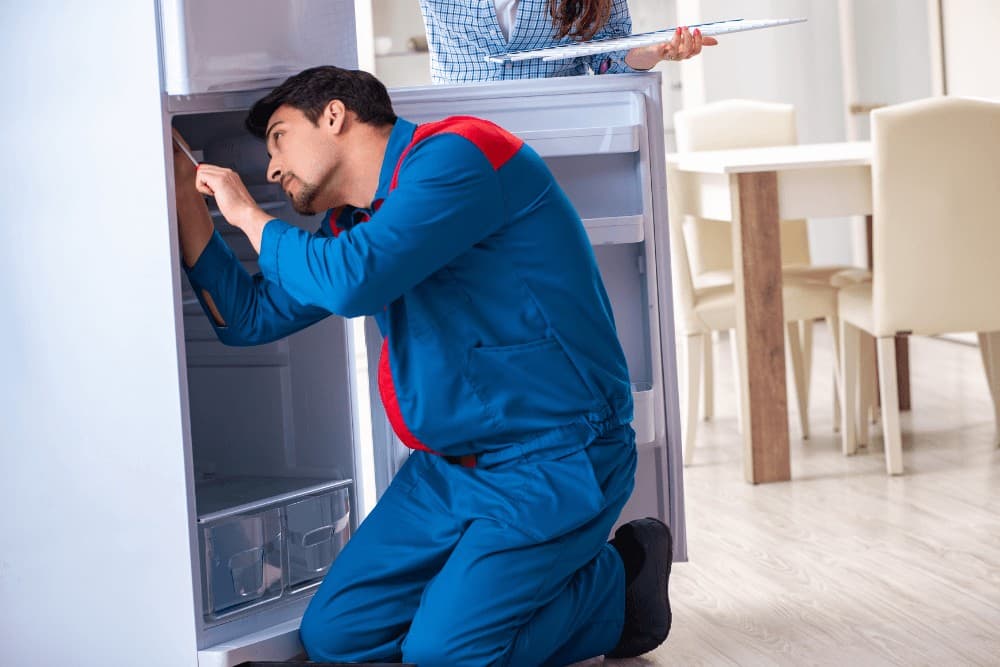
Fridge warm but freezer fine, uneven cooling on a large-capacity model, or a fault after an extended power cut — One Click Technicians repairs Hitachi refrigerators across Abu Dhabi, including the Dual Fan Cooling system most Hitachi fridges are built around, with a fixed price confirmed before any work starts. We identify which compartment is actually affected first, since that single detail changes the entire diagnosis on a dual-fan system.
How Hitachi's Dual Fan Cooling Actually Works — and Fails
Most Hitachi refrigerators sold in the UAE — including the large-capacity family models Hitachi is particularly well known for locally — are built around Dual Fan Cooling paired with an inverter compressor. The principle is similar to Samsung's Twin Cooling in one important respect and different in another: like Samsung, Hitachi's system cools the fridge and freezer compartments independently rather than through one shared airflow path, which means the same practical diagnostic logic applies — one compartment can fail while the other keeps working normally. Where Hitachi's approach differs mechanically is that independence is achieved through two separate fans circulating air from a shared refrigerant circuit, rather than two fully separate evaporators the way Samsung's design works. For diagnosis, the practical implication is similar either way: a fault isolated to one compartment usually points to that compartment's fan or its control, not the compressor.
Hitachi's inverter compressor varies its speed continuously based on readings from what Hitachi calls Eco Thermo Sensors — and notably, Hitachi fridges typically use two of these, one per compartment, feeding independent readings back to the control system so each side can be managed according to its own actual conditions rather than a single averaged reading. This dual-sensor approach is part of why Hitachi markets these units as maintaining performance even at high ambient temperatures — manufacturer literature for several models cites effective cooling maintained up to around 60°C ambient, relevant in an Abu Dhabi garage, store room, or poorly ventilated utility space in peak summer, where ambient temperatures around a fridge can genuinely climb far higher than in an air-conditioned kitchen.
Many Hitachi models also use vacuum insulation panels (VIP) rather than relying solely on standard foam insulation, which Hitachi's own literature associates with extended cooling retention during a power outage — some models are rated to hold safe temperatures for up to 12 to 16 hours without power, depending on the model. This is a genuine, verifiable feature difference worth knowing about if your household experiences occasional power interruptions, though it doesn't change the unit's day-to-day fault profile.
Hitachi backs the inverter compressor on many models with a 10-year warranty, in line with the pattern most major brands now follow for this component specifically. As with LG, Samsung, and Bosch, when we diagnose a compressor-adjacent fault on a Hitachi fridge, we check the unit's age and flag potential warranty coverage before ever quoting a full compressor replacement — and given the dual-fan, dual-sensor design, we specifically distinguish between a fan/sensor fault isolated to one compartment (comparatively inexpensive) and a genuine compressor or shared refrigerant circuit fault affecting both (the more expensive category).
Hitachi is particularly known in the UAE market for large-capacity family refrigerators — models in the 600 to 755-litre range are common, well beyond what most other brands offer as standard. These larger units place proportionally more demand on the dual-fan circulation system to move air evenly through a bigger internal volume, and we've found uneven cooling complaints (one shelf or drawer noticeably warmer than another) show up somewhat more often on these larger-capacity models than on standard-sized fridges from any brand, simply because there's more internal volume for airflow to reach evenly.
Which Hitachi Refrigerators We See Most in Abu Dhabi
Large-capacity side-by-side and multi-door (600L+)
Hitachi's signature category in this market — genuinely larger than most competing brands' standard offerings, common in bigger Abu Dhabi villas and family households. The dual-fan system works harder to circulate air evenly through the larger internal volume, and uneven cooling between shelves is a real, if usually minor, fault pattern worth mentioning if you notice it.
Top-mount inverter models
A common mid-range configuration in Abu Dhabi apartments — freezer on top, fridge below, built around the same inverter compressor and dual-sensor system as the larger models, at a more compact scale.
Selectable Zone / multi-mode compartment models
Newer Hitachi fridges let you switch a specific drawer or compartment between modes (vegetable storage versus soft-freeze for meat, for example). This adds a dedicated control zone with its own sensor and damper beyond the standard two-compartment Dual Fan Cooling system, worth mentioning specifically if the fault is isolated to this zone rather than the main fridge or freezer.
Stabilizer-free operation models
Many Hitachi units are rated for stabilizer-free operation across a wide voltage range, genuinely relevant given occasional grid fluctuations during Abu Dhabi's peak summer demand — though this reduces electrical fault risk rather than eliminating it entirely.
Landlord-supplied units in rented apartments
A number of the Hitachi fridges we service in Abu Dhabi are landlord-supplied units already installed when a tenant moves in, often with no known service history. We can usually identify the model and approximate age from the rating plate, relevant for checking inverter compressor warranty status.
Hitachi Diagnostic Indicators
Hitachi fridges vary by model generation in how they display faults — newer models with a digital control panel show a specific error code, while many standard models communicate through a blinking temperature display or an audible alarm pattern instead. Here's what the indicators we see most often on Hitachi units in Abu Dhabi actually mean.
| Indicator | Fault | Likely cause | DIY-checkable? | Typical fix |
|---|---|---|---|---|
| Flashing temperature display on one compartment only | Compartment-specific sensor or fan fault | Because Hitachi's Dual Fan Cooling uses independent sensors and fans per compartment, a fault isolated to a blinking display on just one side points specifically to that compartment's Eco Thermo Sensor or its dedicated fan, not the shared compressor. | Partially — note exactly which compartment's display is affected | Sensor or fan testing isolated to the affected compartment; the other side typically continues operating normally. |
| Audible alarm with both compartment displays flashing | General/shared system fault | Unlike a single-compartment fault, both sides flashing together points toward the compressor or the shared refrigerant circuit feeding both fans. | No — needs proper diagnosis | This is the pattern that genuinely warrants compressor-level testing, unlike a single-compartment indicator. |
| Door alarm sounding with door closed | Door switch or seal fault | The door sensor isn't correctly detecting closure — either a genuine switch fault or a door not sealing flush due to a worn gasket or unlevel installation. | Yes — check the seal and whether the unit is level first | Switch replacement if the door genuinely seals correctly but still triggers the alarm; seal replacement or leveling correction otherwise. |
| Selectable Zone mode not switching or stuck | Zone damper or control fault | On models with a switchable compartment, the damper controlling airflow to that zone isn't responding to mode changes correctly. | Partially — try switching modes again and note if it responds at all | Damper or its control module needs testing; this fault is isolated to the zone feature and doesn't affect main fridge or freezer cooling. |
| No display, unit silent | Power supply or main board fault | Either a genuine power interruption at the socket or breaker, or a failed main control board. | Yes — check the socket and breaker first | If power is confirmed present at the socket, the main board needs testing. |
| Ice dispenser producing little or no ice (equipped models) | Ice maker or water supply fault | A frozen or restricted water inlet line is the most common cause, followed by a water filter overdue for replacement. | Yes — check for ice blocking the inlet line first | Thawing a blocked line resolves a real share of these; a persistent fault needs the module tested. |
| Eco Thermo indicator flashing on both compartments together | Shared sensor circuit or main board fault | Unlike a single-compartment flash, both Eco Thermo Sensors reporting a fault together points toward the shared control circuit or main board rather than either individual sensor. | No — needs main board diagnosis | Main control board testing, since the fault pattern rules out an isolated single-sensor cause. |
Flashing temperature display on one compartment only — Compartment-specific sensor or fan fault
- Likely cause
- Because Hitachi's Dual Fan Cooling uses independent sensors and fans per compartment, a fault isolated to a blinking display on just one side points specifically to that compartment's Eco Thermo Sensor or its dedicated fan, not the shared compressor.
- DIY-checkable?
- Partially — note exactly which compartment's display is affected
- Typical fix
- Sensor or fan testing isolated to the affected compartment; the other side typically continues operating normally.
Audible alarm with both compartment displays flashing — General/shared system fault
- Likely cause
- Unlike a single-compartment fault, both sides flashing together points toward the compressor or the shared refrigerant circuit feeding both fans.
- DIY-checkable?
- No — needs proper diagnosis
- Typical fix
- This is the pattern that genuinely warrants compressor-level testing, unlike a single-compartment indicator.
Door alarm sounding with door closed — Door switch or seal fault
- Likely cause
- The door sensor isn't correctly detecting closure — either a genuine switch fault or a door not sealing flush due to a worn gasket or unlevel installation.
- DIY-checkable?
- Yes — check the seal and whether the unit is level first
- Typical fix
- Switch replacement if the door genuinely seals correctly but still triggers the alarm; seal replacement or leveling correction otherwise.
Selectable Zone mode not switching or stuck — Zone damper or control fault
- Likely cause
- On models with a switchable compartment, the damper controlling airflow to that zone isn't responding to mode changes correctly.
- DIY-checkable?
- Partially — try switching modes again and note if it responds at all
- Typical fix
- Damper or its control module needs testing; this fault is isolated to the zone feature and doesn't affect main fridge or freezer cooling.
No display, unit silent — Power supply or main board fault
- Likely cause
- Either a genuine power interruption at the socket or breaker, or a failed main control board.
- DIY-checkable?
- Yes — check the socket and breaker first
- Typical fix
- If power is confirmed present at the socket, the main board needs testing.
Ice dispenser producing little or no ice (equipped models) — Ice maker or water supply fault
- Likely cause
- A frozen or restricted water inlet line is the most common cause, followed by a water filter overdue for replacement.
- DIY-checkable?
- Yes — check for ice blocking the inlet line first
- Typical fix
- Thawing a blocked line resolves a real share of these; a persistent fault needs the module tested.
Eco Thermo indicator flashing on both compartments together — Shared sensor circuit or main board fault
- Likely cause
- Unlike a single-compartment flash, both Eco Thermo Sensors reporting a fault together points toward the shared control circuit or main board rather than either individual sensor.
- DIY-checkable?
- No — needs main board diagnosis
- Typical fix
- Main control board testing, since the fault pattern rules out an isolated single-sensor cause.
Common Hitachi Fridge Problems, Diagnosed
What we actually find on a Hitachi fridge, in the order we check it.
| Symptom | Likely cause | What to do |
|---|---|---|
| Fridge compartment warm, freezer compartment fine | Given Hitachi's Dual Fan Cooling design, this points to the fridge-side fan or its Eco Thermo Sensor, not the compressor — the freezer operating normally confirms the compressor and shared refrigerant system are healthy. | Mention that only one side is affected — it meaningfully narrows the diagnosis toward a cheaper, fan-or-sensor-level fix. |
| Both compartments warm at the same time | Unlike the single-compartment pattern, this points toward the compressor or the shared refrigerant circuit feeding both dual fans. | Worth a prompt booking — this is the pattern genuinely consistent with a compressor-level fault on a Dual Fan Cooling system. |
| Uneven cooling — one shelf or drawer noticeably warmer than another | More common on Hitachi's larger-capacity models, where the dual-fan system has more internal volume to circulate air through evenly — often an airflow obstruction (overpacked shelving blocking a vent) rather than a genuine fault. | Check that vents inside the compartment aren't blocked by food packaging before booking; this resolves a real share of these complaints without any repair needed. |
| Clicking sound from the compressor area, then silence | A failing start relay or capacitor on the compressor's start circuit, rather than the inverter compressor's core electronics. | One of the more affordable repairs on this list, despite sounding like a bigger mechanical issue. |
| Freezer frosting up despite normal door sealing | A defrost heater or timer not completing its cycle correctly on the freezer-side fan system. | If the door seal genuinely tests fine with the paper method, mention this so the technician checks the defrost system directly. |
| Fridge running constantly, never cycling down | Dust-blocked condenser coils restricting the heat exchange the inverter compressor needs — genuinely common in Abu Dhabi's dust conditions, and more pronounced on larger-capacity Hitachi units with a bigger condenser surface to accumulate dust across. | A coil clean resolves a real share of these calls, particularly worth doing every few months on larger units in dustier locations. |
| Selectable Zone compartment not maintaining its set mode | A fault in the zone's dedicated damper or control, separate from the main Dual Fan Cooling system entirely. | The main fridge and freezer are very likely unaffected — this is usually an isolated, moderate-cost fix. |
| Loud humming or buzzing from the back of the unit | Typically the compressor's fan or a start relay showing strain, separate from the inverter compressor's own operation. | Get this checked sooner rather than later — a strained relay is on a one-way path to failing outright, not a sound that fixes itself. |
| Ice or frost building up inside the freezer compartment | A door seal no longer sealing fully, letting in humid air that frosts up — more pronounced in Abu Dhabi's humidity than drier climates. | Test the seal with a piece of paper: if it slides out easily with the door shut, the seal needs replacing. |
| Extended power cut, fridge contents still cold when power returns | Not a fault at all — this is the vacuum insulation panel (VIP) system many Hitachi models use working as intended, rated on some models to hold safe temperatures for 12 to 16 hours without power. | No action needed; worth knowing this is a genuine feature rather than assuming the fridge is somehow still secretly powered. |
| Musty smell from inside the fridge despite normal cooling | Almost always a blocked condensate drain rather than anything electrical — standing water breeds odor-causing bacteria over time. | Cleaning the drain pan, usually accessible at the rear or base of the unit, resolves this in most cases without needing a technician visit. |
| Interior light not working, cooling and both fans running normally | A simple LED module or door-switch fault, entirely unrelated to the Dual Fan Cooling system or compressor. | Not a sign of a bigger fault — usually an inexpensive, isolated fix. |
| Faint clicking sound as the compartment temperature stabilizes | Often the damper on Selectable Zone models adjusting position as it switches or fine-tunes airflow — not usually a fault, particularly if it coincides with a mode change you made recently. | Worth noting whether it happens only after adjusting a zone's mode; if so, it's very likely the damper operating normally rather than a fault worth booking for. |
Fridge compartment warm, freezer compartment fine
- Likely cause
- Given Hitachi's Dual Fan Cooling design, this points to the fridge-side fan or its Eco Thermo Sensor, not the compressor — the freezer operating normally confirms the compressor and shared refrigerant system are healthy.
- What to do
- Mention that only one side is affected — it meaningfully narrows the diagnosis toward a cheaper, fan-or-sensor-level fix.
Both compartments warm at the same time
- Likely cause
- Unlike the single-compartment pattern, this points toward the compressor or the shared refrigerant circuit feeding both dual fans.
- What to do
- Worth a prompt booking — this is the pattern genuinely consistent with a compressor-level fault on a Dual Fan Cooling system.
Uneven cooling — one shelf or drawer noticeably warmer than another
- Likely cause
- More common on Hitachi's larger-capacity models, where the dual-fan system has more internal volume to circulate air through evenly — often an airflow obstruction (overpacked shelving blocking a vent) rather than a genuine fault.
- What to do
- Check that vents inside the compartment aren't blocked by food packaging before booking; this resolves a real share of these complaints without any repair needed.
Clicking sound from the compressor area, then silence
- Likely cause
- A failing start relay or capacitor on the compressor's start circuit, rather than the inverter compressor's core electronics.
- What to do
- One of the more affordable repairs on this list, despite sounding like a bigger mechanical issue.
Freezer frosting up despite normal door sealing
- Likely cause
- A defrost heater or timer not completing its cycle correctly on the freezer-side fan system.
- What to do
- If the door seal genuinely tests fine with the paper method, mention this so the technician checks the defrost system directly.
Fridge running constantly, never cycling down
- Likely cause
- Dust-blocked condenser coils restricting the heat exchange the inverter compressor needs — genuinely common in Abu Dhabi's dust conditions, and more pronounced on larger-capacity Hitachi units with a bigger condenser surface to accumulate dust across.
- What to do
- A coil clean resolves a real share of these calls, particularly worth doing every few months on larger units in dustier locations.
Selectable Zone compartment not maintaining its set mode
- Likely cause
- A fault in the zone's dedicated damper or control, separate from the main Dual Fan Cooling system entirely.
- What to do
- The main fridge and freezer are very likely unaffected — this is usually an isolated, moderate-cost fix.
Loud humming or buzzing from the back of the unit
- Likely cause
- Typically the compressor's fan or a start relay showing strain, separate from the inverter compressor's own operation.
- What to do
- Get this checked sooner rather than later — a strained relay is on a one-way path to failing outright, not a sound that fixes itself.
Ice or frost building up inside the freezer compartment
- Likely cause
- A door seal no longer sealing fully, letting in humid air that frosts up — more pronounced in Abu Dhabi's humidity than drier climates.
- What to do
- Test the seal with a piece of paper: if it slides out easily with the door shut, the seal needs replacing.
Extended power cut, fridge contents still cold when power returns
- Likely cause
- Not a fault at all — this is the vacuum insulation panel (VIP) system many Hitachi models use working as intended, rated on some models to hold safe temperatures for 12 to 16 hours without power.
- What to do
- No action needed; worth knowing this is a genuine feature rather than assuming the fridge is somehow still secretly powered.
Musty smell from inside the fridge despite normal cooling
- Likely cause
- Almost always a blocked condensate drain rather than anything electrical — standing water breeds odor-causing bacteria over time.
- What to do
- Cleaning the drain pan, usually accessible at the rear or base of the unit, resolves this in most cases without needing a technician visit.
Interior light not working, cooling and both fans running normally
- Likely cause
- A simple LED module or door-switch fault, entirely unrelated to the Dual Fan Cooling system or compressor.
- What to do
- Not a sign of a bigger fault — usually an inexpensive, isolated fix.
Faint clicking sound as the compartment temperature stabilizes
- Likely cause
- Often the damper on Selectable Zone models adjusting position as it switches or fine-tunes airflow — not usually a fault, particularly if it coincides with a mode change you made recently.
- What to do
- Worth noting whether it happens only after adjusting a zone's mode; if so, it's very likely the damper operating normally rather than a fault worth booking for.
What Actually Breaks on a Hitachi Fridge, and Why
Single-compartment faults point to a fan or sensor, not the compressor
Hitachi's Dual Fan Cooling design means a fault isolated to one side — fridge or freezer, not both — almost always traces to that compartment's dedicated fan or Eco Thermo Sensor, confirmed healthy on the other side by normal operation there.
Both-compartment failure is the pattern that means compressor
When both sides fail to cool simultaneously, that's the pattern genuinely consistent with a compressor or shared refrigerant circuit fault — the opposite signal from the single-compartment pattern.
Larger-capacity models see more uneven-cooling complaints
Hitachi's well-known large-capacity family fridges (600L and above) ask more of the dual-fan circulation system to reach every corner of a bigger internal volume evenly — a real, model-scale-linked pattern rather than a defect, and often resolved by checking for blocked vents before assuming a fault.
Dust accumulates faster on larger condenser surfaces in this climate
A bigger fridge generally means a bigger condenser, and Abu Dhabi's ambient dust load settles on that larger surface area proportionally faster than it would on a standard-sized unit — worth cleaning more frequently on Hitachi's bigger models specifically.
Stabilizer-free rating reduces but doesn't eliminate electrical fault risk
Hitachi's wide-voltage-range operation genuinely helps during Abu Dhabi's peak summer grid fluctuations, but a start relay or control board can still fail from more significant electrical events.
VIP insulation power-cut retention is a real feature, not a fault indicator
A Hitachi fridge that stays cold for many hours during a power outage is the vacuum insulation panel system working correctly — worth knowing this in advance so an extended outage doesn't cause unnecessary concern about food safety when the fridge is, in fact, still holding temperature.
Selectable Zone faults stay contained to that one drawer
Because the switchable compartment runs its own damper and control separate from the main Dual Fan Cooling system, a fault here genuinely doesn't spread to or indicate anything about the rest of the fridge — worth reassuring a customer of this rather than letting a zone fault read as a bigger problem than it is.
How We Diagnose a Hitachi Fridge Fault
Identify which compartment, or both, are actually affected
Given the Dual Fan Cooling design, this single question narrows the diagnosis significantly before any tools come out.
Check the display code, blink pattern, or alarm sequence
Newer models show a specific indicator; standard models communicate through a blink or alarm pattern we interpret against the model's service data.
Check condenser cleanliness and seal condition before anything else
Especially on Hitachi's larger-capacity models, a dusty condenser or a worn seal is checked first, simply because it's the cheapest possible explanation and the most frequent one we actually find.
Test the relevant compartment's fan and sensor if the fault is isolated
Rather than assuming a shared-system fault, we test the specific component serving the affected compartment first.
Confirm inverter compressor warranty status before quoting compressor-level work
If the unit is within its warranty window, we'll flag this before pricing a full replacement.
Fixed price before any work starts
Once the fault is confirmed and isolated, you get an exact price for that specific repair.
Hitachi Refrigerator Repair Cost in Abu Dhabi
A door seal and a full inverter compressor replacement are both 'Hitachi fridge repairs' on paper, but very different jobs. Because Dual Fan Cooling isolates faults to one compartment more often than not, a real share of what looks alarming — one side warm, the other fine — turns out to be one of the more affordable repairs on this page, not a compressor-level job.
Usually worth repairing
A start relay, door seal, single-compartment fan or sensor, or defrost heater fault at almost any age — these run AED 200–550. A fault isolated to just one compartment is a strong early sign you're in this category, not the compressor category.
Worth considering replacement
A genuine compressor or shared refrigerant circuit fault — affecting both compartments simultaneously — on a unit already 8-10+ years old and outside any compressor warranty. Given Hitachi's larger-capacity models carry a higher new-unit price, we'll walk through the specific numbers for your model before you decide.
See more on the general Refrigerator Repair page, or our Repair or Replace guide for other appliances.
Frequently Asked Questions
How much does Hitachi refrigerator repair cost in Abu Dhabi?
Why is only my fridge section warm while the freezer stays cold?
My large Hitachi fridge has one shelf warmer than another — is that a fault?
Do you repair Hitachi's Selectable Zone or multi-mode compartments?
Is it worth repairing an old Hitachi fridge, or should I replace it?
My Hitachi fridge stayed cold for hours during a power cut — is that normal?
Are you an authorized Hitachi service center?
Do you handle Hitachi freezers as well as fridges?
Why does my Hitachi fridge run constantly without cycling off?
Is there a warranty on the repair?
Do you offer same-day Hitachi refrigerator repair?
How do I find my Hitachi fridge's model number and age?
Why does my Hitachi fridge smell musty even though it's cooling fine?
Ready When You Are
Book a Hitachi-experienced technician today.
Fixed price confirmed before any work starts. Licensed technicians, 90-day workmanship warranty.